
Boxing in Pipework in Suffolk
Visible pipework drags down even a freshly-decorated room. Boxing it in cleanly — with proper access panels for any future maintenance — is one of the smallest jobs that makes the biggest visual difference.
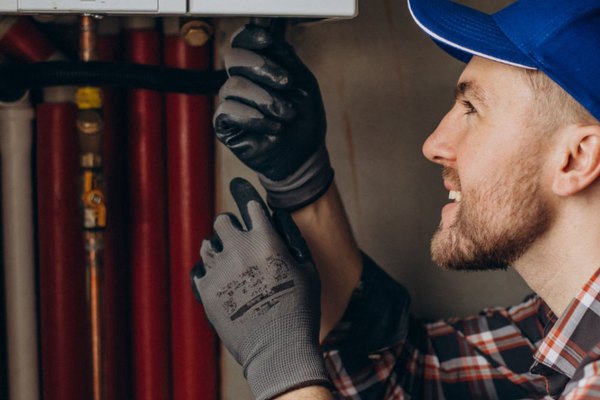

Why box pipework in?
Most older Suffolk homes have visible pipework somewhere: copper waste pipes running down the wall in a bathroom, the central heating return pipe under a bedroom window, the soil pipe in a downstairs cloakroom, the boiler flue pipe coming through a utility room. None of it is dangerous, but all of it looks dated and untidy.
Boxing in is the simple finishing job of building a tidy painted MDF or timber enclosure around the pipework so it disappears into the room's decoration. Done well, the boxing-in is invisible — you wouldn't know there was anything behind it. Done badly, you've added a lumpy painted shape to the wall that looks worse than the original pipes did.
Where boxing-in is the right answer
Common boxing-in jobs across Suffolk:
- Bathroom waste pipes — the visible 40mm waste from basin and bath, often running diagonally across the wall to the soil pipe
- Soil pipes — the larger 100mm vertical pipe taking waste from the toilet down to the drain
- Central heating pipework — particularly the radiator feeds running across walls in older houses where the system was retrofitted to a property that didn't originally have CH
- Boiler condensate pipes and flue extensions — especially where a combi boiler has been moved and the new pipe runs across a kitchen wall
- Kitchen plumbing — the supply and waste pipes behind a freestanding washing machine or dishwasher
- Loft hatches and access points — building a clean removable surround
- RSJs and structural steel — cladding visible steelwork after a wall is knocked through
How a proper boxing-in is built
The order matters. Frame first, in batten timber set out plumb and square (no Suffolk wall is plumb, so you're working off a true vertical reference rather than off the wall surface). Frame deep enough to clear the pipework with at least 10mm space on every side — tight to the pipework will rattle when the heating runs and might prevent thermal expansion.
The skin is moisture-resistant MDF in most cases (it cuts cleanly, takes paint beautifully, doesn't warp). For bathrooms specifically I use 18mm MR-MDF for the front and 12mm for sides, with all edges sealed before paint to stop moisture wicking in. For more decorative work in heritage properties, tongue-and-groove timber boarding to match wainscoting elsewhere in the room.
Crucially, every boxing-in includes a removable access panel where the pipework meets a maintenance point: stop valves, isolators, traps, joints. Boxing in over an isolator with no way to get to it is a guaranteed regret in five years' time when you need to change a tap and have to break the boxing back open with a chisel.
Finishing — primer, caulk, paint
Once the boxing is built, every external corner is caulked with decorator's caulk, every internal corner sealed neatly, and every screw hole filled and sanded. A coat of acrylic primer goes on the bare MDF (essential — MDF unprimed will absorb paint unevenly and look patchy), then two coats of finish paint to match the wall. The finished boxing reads as part of the wall.
I'll usually do the painting as part of the same visit, but if you have a decorator coming in anyway it can be left ready-primed for them to finish.
Bathroom boxing — particular care needed
Bathrooms are the most demanding boxing environment because of the moisture. The whole assembly — framing, panels, fixings, sealants — needs to handle the long-term humidity that builds up around showers and baths. Stainless steel or yellow-zinc-plated screws (not bright zinc which corrodes), sealed MR-MDF panels, mould-resistant paint or tile-style finishes, and proper extraction in the room itself to handle the moisture before it settles.
Frequently asked questions
How long does a typical boxing-in job take?
A single run of pipework boxing (say, a bathroom waste run) is half a day for the build, plus another half-day for full paint finish. Multiple runs in a single visit get cheaper per run.
Will the boxing be removable for future maintenance?
Yes — access panels at every joint, isolator and trap. Standard practice on every job.
Can you box in a soil pipe in a downstairs WC?
Yes — one of the most common requests. The boxing typically incorporates an access panel at the WC pan connector and at the drain stack joint.
Do you tile over boxing in a bathroom?
Yes — MR-MDF substrate, tile backer board if you want extra moisture protection, then tiled to match the surrounding wall. The boxing effectively disappears into the room.
Can you box in a boiler flue?
Only the parts of the flue inside the building, and only with appropriate clearance to combustibles per the boiler manufacturer's instructions. The boiler itself and the immediate flue exit must remain accessible to a Gas Safe engineer.
Other services I offer across Suffolk
Towns I cover for boxing in pipework
I work across the whole of Suffolk. A handful of the towns I regularly visit:
Ready to book boxing in pipework in Suffolk?
Drop me a line with a few photos and a description of the job. I'll come back to you the same day with an honest opinion and a no-obligation quote.